
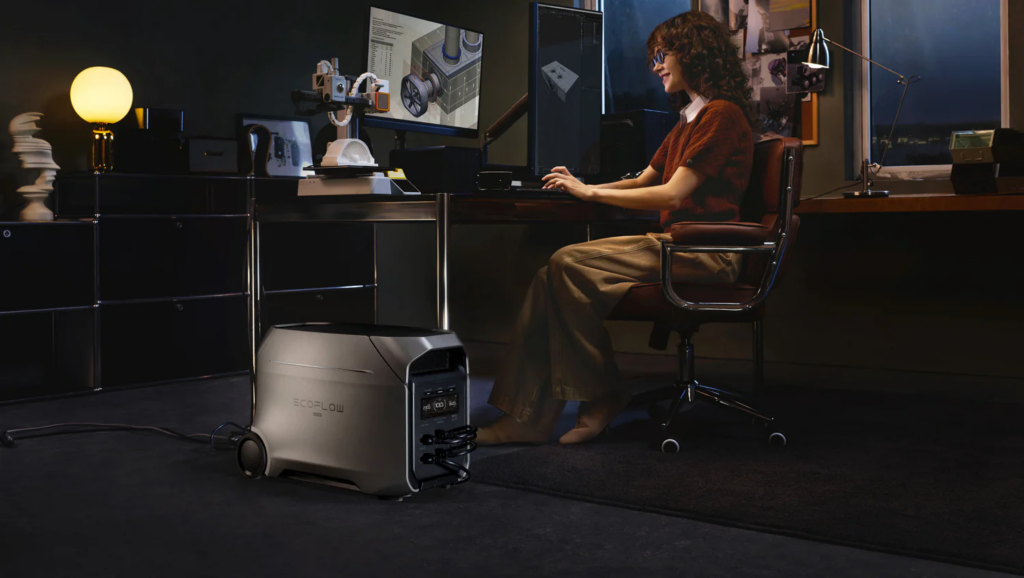
The definition of the workplace has fundamentally shifted. For digital nomads, freelance photographers, and remote engineers, the office is wherever the laptop opens. However, this freedom introduces a critical vulnerability: power anxiety. Reliance on public outlets or vehicle batteries often limits productivity and location choices.
Professional autonomy requires energy independence. A portable power solution is no longer just camping gear; it is a business asset. By integrating a high-capacity battery system, you secure the continuity of your workflow against grid instability and geographic limitations.
1. The Critical Role of Pure Sine Wave Inverters
The most significant difference between a cheap battery bank and a professional-grade unit lies in the inverter technology. Sensitive electronics, such as MacBook Pros, drone chargers, and studio monitors, require clean electricity to operate safely and efficiently without overheating.
A solar generator utilizes a Pure Sine Wave inverter to mimic the smooth oscillation of grid electricity. This prevents the “electrical noise” found in modified sine wave inverters, which can damage the power supplies of high-end audio-visual equipment over time.
Preventing Hardware Degradation
Using dirty power can shorten the lifespan of your devices. For professionals carrying thousands of dollars in hardware, the risk is unacceptable. A pure sine wave output ensures that your tools receive the stable voltage they were designed for, regardless of the battery’s charge level.
Audio Interference
For podcasters and video editors, electrical interference is a nightmare. Modified sine wave inverters often introduce a hum or buzz in audio recordings. A quality solar generator eliminates this issue, providing a silent electrical floor essential for clean signal processing in the field.
2. Uninterrupted Power Supply (UPS) for Data Safety
Data loss is the ultimate catastrophe for any remote worker. While cloud backups are standard, a sudden power cut during a render or a file transfer can corrupt local data. Modern power stations often include an Emergency Power Supply (EPS) or UPS function to mitigate this.
When plugged into the grid, the device bypasses its battery to power your laptop directly. If the grid fails, the unit switches to battery power in milliseconds. This switchover is fast enough that desktop computers and external RAID drives stay running without a reboot.
- Switchover Speed: Typically under 30 milliseconds.
- Pass-through: Powers devices without draining the battery.
- Protection: Acts as a buffer against voltage spikes.
This feature transforms the solar generator into a safety net. It allows you to work through thunderstorms or unstable campground power grids without fear of losing hours of progress on a critical project.
3. Understanding Battery Chemistry and Lifespan
The heart of any solar generator is its battery cell. In recent years, the industry has shifted from Nickel Manganese Cobalt (NMC) to Lithium Iron Phosphate (LiFePO4) chemistry. For a daily-use office tool, this distinction is vital for long-term return on investment.
LiFePO4 batteries are heavier but offer significantly superior cycle life. While an NMC battery might degrade to 80% capacity after 500 cycles, a LiFePO4 unit can last for 3,000 cycles or more. This equates to nearly a decade of daily use before noticeable degradation occurs.
Thermal Stability and Safety
Safety is paramount when working in confined spaces like a van or a small cabin. LiFePO4 chemistry is inherently more stable and resistant to thermal runaway. This makes the solar generator safe to store next to your workstation or sleeping area without the fire risks associated with older lithium technologies.
4. Solar Generator Charging Inputs and Efficiency
Time is money, and waiting for a battery to charge is inefficient. A modern solar generator must support high-speed AC charging. Top-tier models can recharge from 0% to 80% in under an hour via a standard wall outlet, allowing for rapid turnarounds between work sessions.
However, the “solar” aspect is where true independence lies. The device uses an MPPT (Maximum Power Point Tracking) controller to optimize the energy harvest from solar panels. This controller adjusts voltage and current in real-time to match the changing sunlight conditions.
High-Voltage Solar Input
Professional units allow for high-voltage solar input, meaning you can daisy-chain multiple panels in series. This increases efficiency on cloudy days by keeping the voltage above the charging threshold. It ensures your solar generator continues to replenish even when the weather is less than ideal.
Multi-Source Recharging
The best workflow involves redundancy. You should be able to charge via solar panels during the day, AC outlets when available, and a 12V car socket while driving. Some units even allow dual-charging (AC + Solar) simultaneously to maximize input speed.
5. Acoustic Management for Video Calls
The noise floor of your environment matters. Loud cooling fans can ruin a Zoom call or distract you during deep work. Engineering advancements have focused heavily on thermal management to keep these high-output batteries running quietly.
A premium solar generator utilizes smart fan curves. The fans should remain off or spin slowly during low loads, such as charging a laptop or phone. They only ramp up during high-wattage output or rapid recharging, ensuring silence during sensitive tasks.
- Low Load: Passive cooling or low RPM (<30dB).
- High Load: Active cooling for inverter safety.
- App Control: Manually limit charging speeds to reduce noise.
This acoustic stealth allows the device to sit under a desk or in a corner without becoming an auditory nuisance. It respects the need for a professional, distraction-free environment, even in the middle of a forest.
6. Calculating the Right Size for Your Needs
Selecting the correct capacity involves a simple audit of your daily energy consumption. You need to calculate the total watt-hours (Wh) required to run your essential devices for a full workday. This ensures you purchase a solar generator that matches your specific workflow.
Start by checking the power brick of your laptop. If it draws 60 watts and you work for 8 hours, you need 480Wh. Add a margin for efficiency loss (usually 15-20%) and other devices like phones or hotspots. A 1000Wh unit is often the “sweet spot” for most solo digital nomads.
The Buffer Strategy
It is always wiser to oversize your battery than to undersize it. A larger capacity reduces the depth of discharge per cycle, which further extends the battery’s lifespan. It also provides a buffer for days with poor solar production, ensuring you never face a blackout.
Scalable Ecosystems
Some systems allow for expandable capacity via extra batteries. This modular approach is excellent for growing businesses. You can start with a base solar generator for portability and add expansion batteries later if your equipment demands increase, keeping your initial setup lightweight and flexible.