
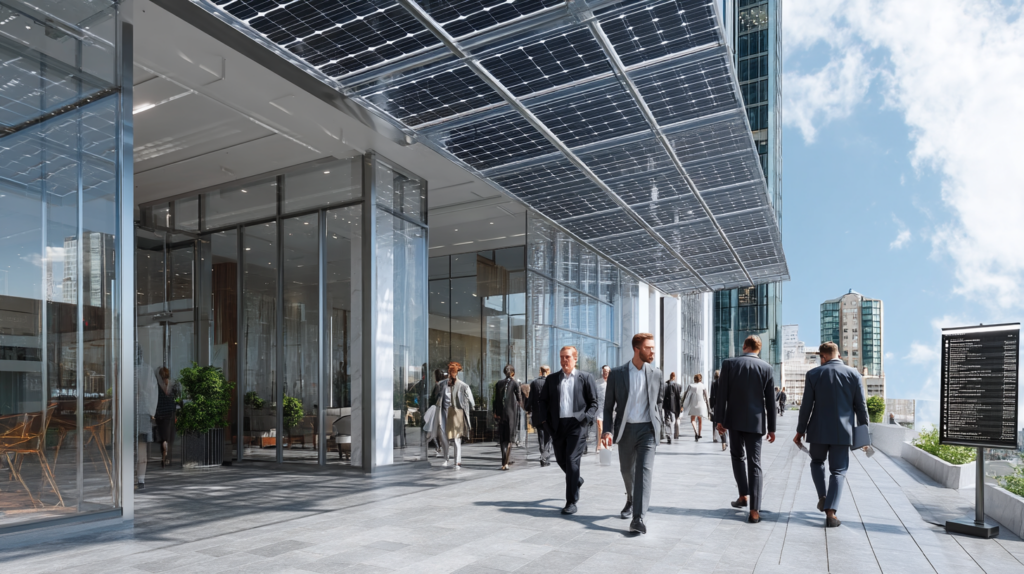
Key takeaways
- On-site solar energy can reduce your operation costs while helping you achieve real, measurable corporate sustainability goals.
- You can monitor the progress using benchmarks that are easy to track such as avoided emissions, kWh generated, and long-term energy costs.
- Different models of ownership & finance alter payback, risk and how you report results to stakeholders.
- If you make the solar system about the data, about the reporting, that helps you with the ESG narrative for decades.
Why On-Site Solar is Important for Corporate Sustainability
If you feel like sustainability goals keep moving you are not alone. ESG reporting jumped fast: In 2023, more than 90 of S&P 500 companies published some form of sustainability report, and investors don’t just look for pledge goals Michael Oppenheimer, a climate scientist at Princeton University, said, “I expect in the next few years to see scientific data supporting climate commitments, investing, and infrastructure sometimes getting government guys interested even more,” Oppenheimer said.
On-site solar energy gets you from general promises to results that will measure up. Instead of simply purchasing to offset emissions, you reduce Scope 2 emissions at your facilities.
You can use solar power production to achieve specific amounts of sustainability, such as 50% renewable energy in 2030 or a science-based reduction path. I worked with one manufacturer at the beginning stages of approving one rooftop solar installation who used the performance figures to support a portfolio-wide installation. Their board gave up asking “Is this marketing?” And began to ask “Where else can we do this?”.
Making The Connection Between On-Site Solar And ESG / Corporate Reporting
If your ESG team is struggling with spreadsheets, solar energy can actually help make life easier. A well-instrumented solar system provides you with good data: clean/continuous/robust data; e.g. kWh’s produced, CO2e’s saved, share of total electricity from renewable energy.

You could submit that to GHG Protocol reporting, Scope 2, CDP’s climate questionnaires, TCFD-style discussion of risk. Owning solar and associated RECs substantiates your use of zero-emissions electricity and supports reductions in Scope 2 emissions (EPA guidance). For example, one of their clients superimposed site-by-site solar productivity onto its SASB energy metrics such that their sustainability report presented site-level numbers, not opaque statements.
You also support the social and the governance sides. Local solar projects provide work for installing and maintaining solar energy projects, and long-term contracts demonstrate structured risk management. When the auditors ask and you have the timestamps and the meter data and you have the documentation of assumptions, they don’t have guess work. That builds up trust of investors and customers who now read up ESG sections almost like financial notes.
Beyond Sustainability Business Benefits
Let’s talk about money because your CFO will. Commercial electricity prices in the US have risen about 15% since 2020 and 2023. Solar energy allows you to hedge them against that. I have seen warehouses hit simple paybacks in 5 to 8 years but offices closer to 7 to 10 depending on incentives and rates.

Beyond savings, solar power and optional energy storage can be the key to resilience. Solar power benefits the environment by reducing greenhouse gas emissions and improving air quality, reinforcing why on-site generation matters for long-term sustainability goals (DOE). If you’re in cold storage, data centers, or critical manufacturing, for example, even a partial backup from sun and battery store may secure a slug / by a put on throughout get buy and put out. And there is the second, quieter benefit, reputation.
In one instance, I have seen a supplier lock down a major contract because their RFP response included verified renewable energy information, in this case from their rooftop solar panels. The buyer’s procurement team has told them off the record, “You were the only one that can prove it, not just promise it.” That is hard to ignore.
Solar on-Site: A Case Study Using On-Site Solar for Corporate Facilities
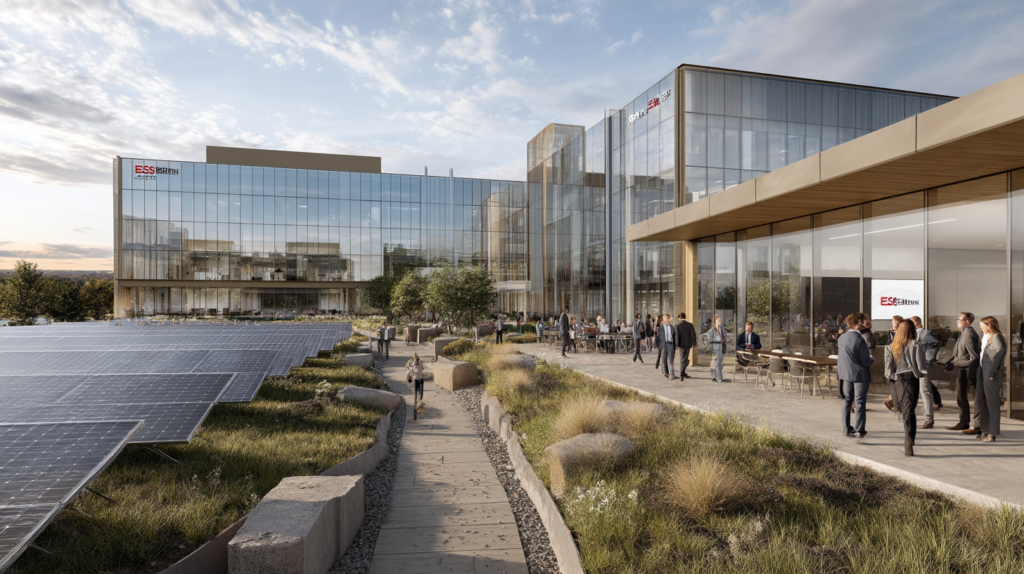
You have more options than panels on a flat roof. Rooftop solar energy is great for offices, warehouses and plants that have solid structures with relatively young roofs. If your roof is due for replacement in the near future, you may want to phase the work with the solar work.
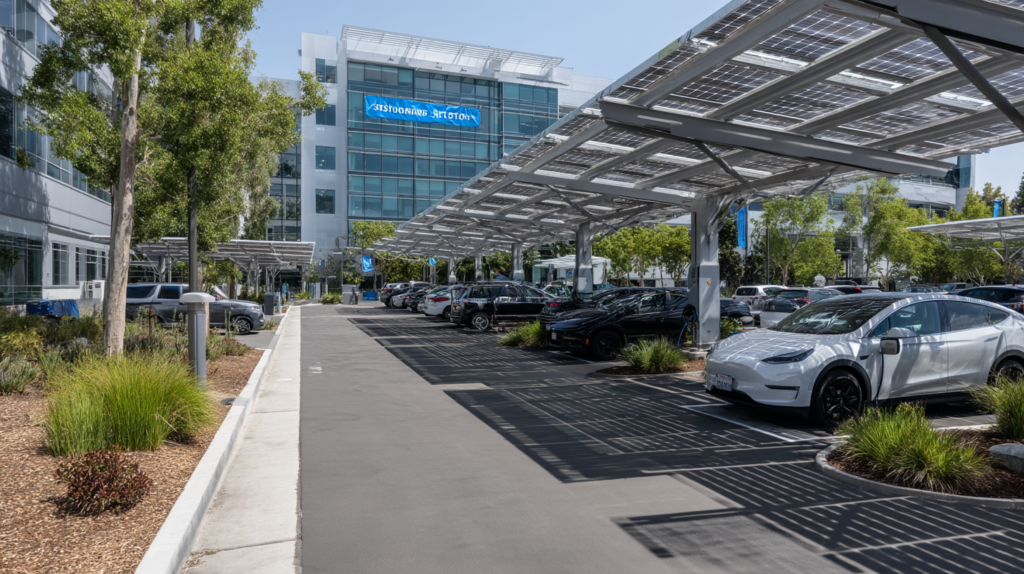
Parking lots could have carport solar power structures that generate electricity and provide car shade. Many companies have put-up these with EV chargers, which are noticed by employees. It becomes a sign of your commitment to sustainability and visible nonetheless.
If you have land around a campus or industrial site, ground mount renewable energy systems can go big. You just have to think of layout, setbacks and visual impact. Some companies still mix on-site solar with off-site contracts such as power purchase agreements or utility green tariffs to get to higher percentages of renewable energy without overloading one place with solar.
Building A Solar Strategy With Your Sustainability Goals
Before you call the installers, you need a baseline. Pull at least 12 months of utility bills and demand charges and operating hours of your top sites. When I did this with a multi-site operator there were three buildings that consumed 60% of their total electricity. And that changed the entire solar energy conversation.
Next, see the way in which that data connects to your sustainability goals. If your corporate sustainability objectives call for 40% free reduction in emissions by 2030, break that down in terms of kWh and solar capacity at specific facilities. Ask yourself, which places provide the greatest reduction for your money.
From there, create a multi-year road map. Okay, maybe year one a pilot rooftop solar system on your flagship site, then year two grows and reaches carports growing to regional hubs and year three get the designs standardised and contracts incorporated. It does not need to be perfect. But it’s just that it has to be clear enough that leadership sees a path and not a one-off project.
Financial Models And Ownership Models
Money structure determines everything. Some companies prefer to purchase the solar system outright and capture tax credits and book the depreciation. That can work if you have some capital and are in a long-term perspective.
Others rest on power purchase agreements, in which a third party owns the system and charges you for using the solar energy they generate. You don’t have any up-front capital expense, but you are signing up for a contract for a long period of time, usually 15 to 25 years. I usually encourage clients to closely observe escalators and early termination terms.
Leases and local incentives are also important. The Inflation reduction Act increased the amount of federal credits and I have seen projects where incentives reduced paybacks by several years. Your choice has an impact on how you can claim renewable energy in ESG reports so finance and sustainability teams need to sit at the same table.
Creating Systems That Support Long-Term ESG Reporting
A good solar installation happens to be big, rather sized to your operations and your reporting needs. Or maybe you want to size up a plant’s load such that 40% of load is offset now, with space for expansion at a later date. Oversizing a system on a low load building can cause headaches with exports and tariffs.

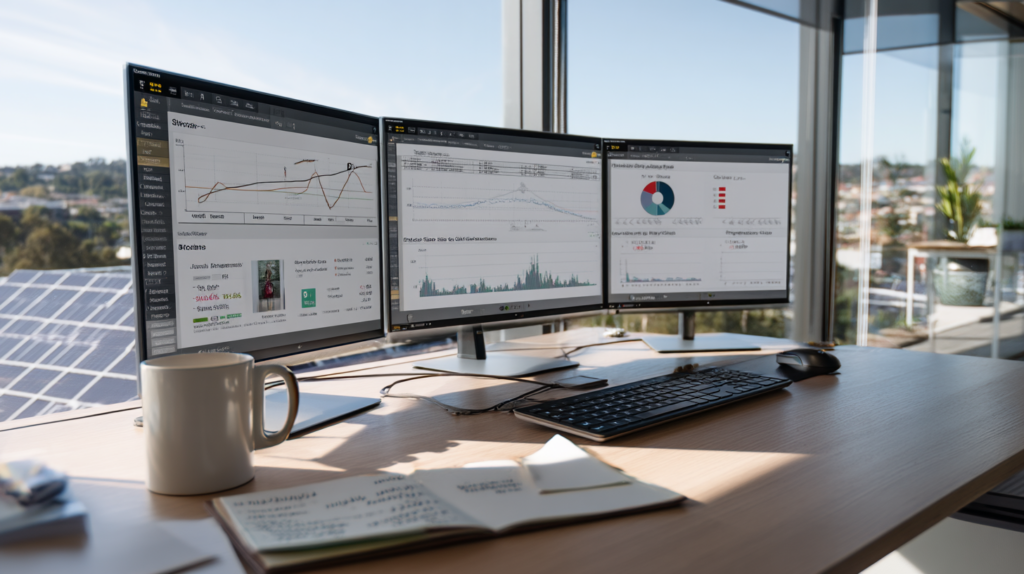
Data is where many companies, however, go down. You want to monitor real-time production of solar energy and store data on history for at least the life of your sustainability initiatives. Monthly exports to your ESG software or even a shared dashboard may keep everyone on the same page.
When called upon by auditors or investors to prove, you can present meter readings, uptime, and avoided emission calculations. If your load changes due to adding a production line or retiring equipment, you adjust baselines but retain a transparent method. That consistency builds trust as time passes.
Overcoming General Internal Barriers
Inside the company, resistance never comes from “We hate renewable energy.” It tends to sound more like: “We are busy” or “This is a risky feeling”. I remember a CFO who began one of his meetings with “I am not convinced about investing in solar, but convince me.”
We discussed energy costs, estimated solar power output and incentives and payback. Then work them into their sustainability goals and future ESG disclosures. By the end, he said, “If we do this to one spot, if numbers hold, we scale.” That was enough.
Facilities, legal, and procurement also need clarification. Who handles maintenance? What happens if there will be a roof leakage under the array? Clear contracts, performance guarantees and realistic O&M plans put those fears to rest. Communicating about progress to employees, perhaps with a lobby display of solar energy production, makes a technical project into one with widespread victory.
Case Studies – Corporations Going Green & OffGrid with On-Site Solar
Let me share three quick examples. A regional manufacturer installed a 1MW solar system on its main plant. Before, grid electricity fuelled most of their emissions. After making the switch to solar, they managed to reduce their Scope 2 emissions by roughly 35%, and stalled energy costs (during volatile rate hikes).
A retailer who had dozens of small stores took a different route. They rolled out rooftop solar projects that were standardized on the largest locations first, then added carports where it made sense to park there. Their ESG report now indicates renewable energy percentages at a site level, which was of great interest to lenders.
An office campus combined the use of solar energy with energy storage at key buildings. They had a history of brief outages which would disrupt operations. With solar plus battery storage, they are able to ride through many events without the diesel generator. That contributes to resilience messaging and less dependence on fossil fuels during their climate disclosures.
How To Find The Right Partner At Commercial Solar
Choosing a partner is nearly equal to the choice of technology. You want a team that knows about commercial solar, permitting, structural constraints, and ESG reporting requirements. Ask for references from other similar facilities, not just residential jobs.
Look at their engineering depth, their safety record, how they manage to do long term monitoring. Some have platforms that garbage-feed solar energy information directly into your data collection. Others get off on the next to almost no support, which is just a handful of basic portals.
When you compare proposals, do not focus solely on the price per watt. Consider warranties, production guarantees, O&M terms and how they will incorporate solar data into your sustainability initiatives. I like to think that it’s finding a partner in energy solutions rather than a contractor for a long term solution.
Commercial Solar Power Solutions For Corporate Sustainability
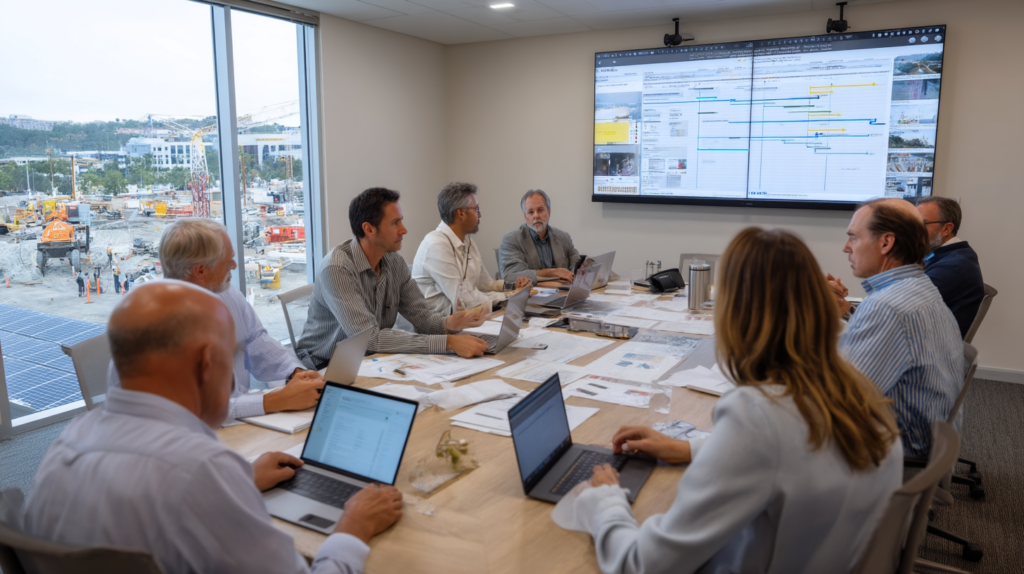
At some point you need to fit technology in your portfolio. Different commercial solar power solutions fit different sites: high-load warehouses, 24/7 plants, or daytime-heavy offices. Design choices are determined by load profiles and operating hours.
You may have combinations of rooftop arrays coupled with carports and limited ground-mounts and then add some storage solutions at most-critical facilities. Some companies also combine solar with EV charge to aid in supporting fleet transitions and employee programmes.
Across regions, policies and incentives differ so your strategy on renewable energy and clean energy is not going to be the same everywhere. Still, there are standard design principles, data collection, and ways in which you can talk about commercial solar in your ESG story. That consistency helps stakeholders build trust in the story behind your numbers.
Practical Next Steps To Move Over From Goals To Solar Project
If you are looking for a simple path to start out on, try this. Over the next 30 to 60 days, collect utility information, identify your top five energy-consuming sites, and mark the obvious constraints such as old roofs. Talk with sustainability and finance about where solar energy is the best way to support your corporate sustainability goals.
Over 6 to 12 months run feasibility studies and get preliminary designs, and compare financing options, such as power purchase agreements or direct ownership. Pick one or two sites to be pilots, so you can do your learning without overcommitting.
After commissioning track performance for at least one year. Share results internally, tweak your roadmap, and then secure the adoption of solar energy in greater numbers of places. When you integrate solar into normal capital planning, it ceases to be a special project, it becomes part of the way that you operate.
FAQs
Building Blocks is your one-stop solution for all these complex questions.Building Blocks is your one-stop solution to all these complex questions.
It depends on how much load off you offset. If you use 40% electricity from solar energy, then the facility would generally reduce Scope 2 emissions by a similar percentage for said facility, assuming that grid electricity is predominantly fossil fuel electricity. A 1 MW system may be capable of offsetting somewhere near 1,300 to 1,600 MWh/year, which translates into hundreds of metric tons of CO2e/annum.
How do I know if my buildings are good candidates for on-site solar?
Look at age, structure and shading on roofs first. Newer, flat roofs with short falls of equipment usually work well. If roof space is limited then consider carports instead of parking or small ground-mounts. Local utility rates and incentives are also important. Most of the time high rates and good incentives make solar projects interesting. A quick desktop assessment from a commercial solar provider can limit your best locations.
Can On-Site Solar Help with Official ESG & Net-Zero Commitments?
Yes, on-site solar energy is directly in support of net-zero and climate commitments by reducing the Scope 2 emissions. One can report solar generation and avoided emissions under GHG Protocol, CDP, and the like. When combined with other renewable energy contracts and energy efficiency work, solar helps you change from making broad promises to deliver against some verifiable progress in your sustainability targets and sustainability objectives.