
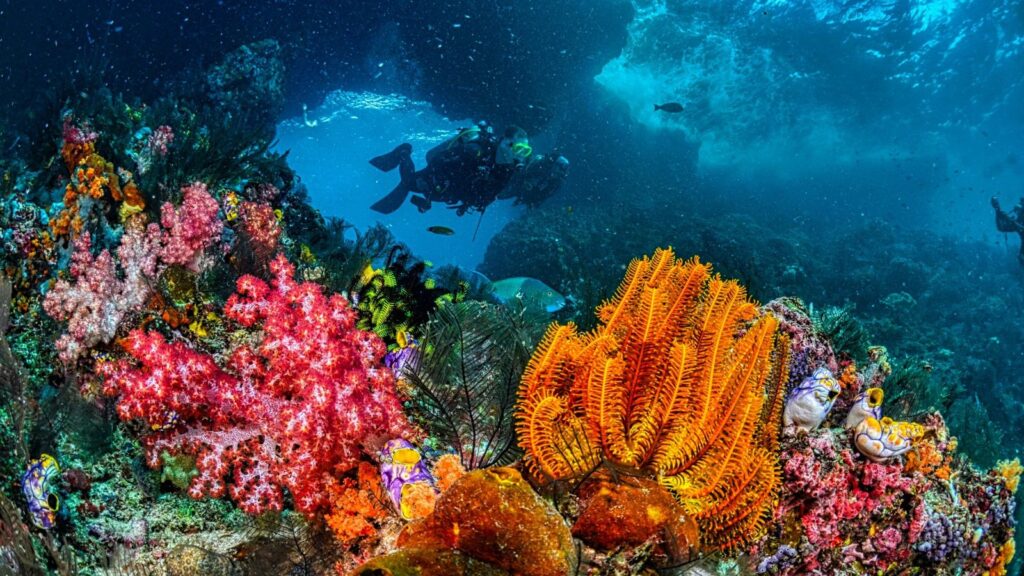
Picture a quiet Sunday evening on a couch somewhere in Brisbane. The dishes are done, the phone is on silent, and someone flicks through a streaming menu until a wall of turquoise fills the screen. Coral fans sway, a turtle glides past a bommie, and a school of fish scatters like confetti. The Great Barrier Reef has that effect. It stops the scroll. Over the decades, this stretch of living limestone off the Queensland coast has become one of the most recognisable natural images on the planet, popping up in wildlife documentaries, animated films, tourism campaigns, video games, and even the artwork of casual mobile entertainment.
That last category surprises a few people, but it shouldn’t. The reef’s colour palette and cast of characters — clownfish, rays, sharks, the ever-photogenic sea turtle — are exactly the sort of imagery designers reach for when they want something bright, calming and instantly Australian. Reef-themed slot games sit comfortably in that tradition, and anyone curious about how they’re built and enjoyed as light entertainment can browse the best pokies sites to see how mechanics like high return-to-play percentages, Megaways reels and bonus features are compared for adult players. These 2026 guides also walk through how the games work, where they sit legally for Australians, and what sensible, low-stakes play looks like.
Documentaries That Made the Reef a Star
Long before it decorated a game reel, the reef earned its fame the honest way: through patient, extraordinary filmmaking. David Attenborough’s work has done more than almost anything to lodge the ecosystem in the public imagination, and the sweeping Great Barrier Reef | BBC Documentaries series remains a benchmark for how to explain a fragile system without dulling its wonder. Viewers come for the spectacle — a cuttlefish changing colour, coral spawning under a full moon — and leave with a genuine grasp of how coral polyps, algae and water temperature all hang together.
That balance of awe and information is why documentaries matter so much to conservation. They turn an abstract idea — an ecosystem 2,300 kilometres long — into something a person on the other side of the world can feel protective of. The best of them quietly slip in the harder truths too: bleaching events, warming seas, the pressure of run-off from the mainland. Those honest touches are what turn passive viewers into people who care.
From Nemo to the Nightly News
Pop culture rarely takes the reef literally. It borrows the mood. Pixar’s Finding Nemo did more for the reef’s global profile than any brochure, sending millions of viewers off to identify with a nervous clownfish and his forgetful blue tang companion. The film was pure fiction, yet it sparked real curiosity about anemones, currents and the East Australian Current that surfers and marine biologists both know well.
Television has kept the reef in regular rotation, from travel programmes to the nightly news whenever a bleaching survey makes headlines. Even fashion shoots and car adverts lean on that unmistakable underwater blue. The reef has become visual shorthand for pristine nature — a symbol that carries meaning long before a single word is spoken. Capturing that imagery is no small feat, and anyone filming or shooting stills professionally must work within the marine park’s filming and photography guidelines, which set out how to record the reef without damaging it — keeping fins clear of coral, minimising disturbance to wildlife, and respecting protected zones. Those rules are why the footage that ends up in documentaries and campaigns is possible at all.
Why Games Reach for Coral and Clownfish
Video games with environmental themes have grown into a genre of their own, and the ocean is a favourite setting. Titles such as Abzû and Beyond Blue invite players to drift through kelp forests and coral gardens, deliberately swapping combat for exploration and a sense of stewardship. Beyond Blue even partnered with real marine scientists to ground its underwater world in fact.
Casual games follow the same instinct on a smaller scale. Reef-themed slot games and puzzle apps use tropical fish, treasure and gentle animation because the imagery is soothing and endlessly recognisable. It’s the same reason an office desktop might sport a coral wallpaper. For adult players, these games are simply a few minutes of low-effort downtime — a spin between chores, a distraction on the train. Understanding them as light entertainment, rather than anything weightier, keeps the whole thing in proportion.
The Real Thing Beats Any Screen
For all the pixels and reels, nothing matches the reef itself. Divers describe a shift in perception once the sun drops — one vivid account of a night dive captures the eerie thrill of torchlight catching parrotfish asleep in mucus cocoons and coral polyps unfurling to feed. It is the kind of experience no animation can fake, and it explains why eco-tourism remains such a powerful funding stream for reef protection.
That tourism comes with responsibility. Every visitor who snorkels, dives or simply cruises the outer reef leaves a footprint, and the difference between a fleeting glimpse and a lasting connection often comes down to how carefully the experience is handled. The footage and photos that fuel the reef’s pop-culture presence are only possible because operators, filmmakers and travellers agree to tread lightly.
Keeping the Wonder Alive
The reef’s journey through pop culture, from Attenborough’s lens to a clownfish icon on a game reel, tells a hopeful story: familiarity breeds affection, and affection funds protection. Every documentary rerun, every reef-themed app opened for a spare five minutes, keeps those colours and creatures front of mind. The trick is remembering that the glowing screen is a tribute, not a substitute. The living reef still waits offshore, quietly getting on with the business of being one of the natural wonders of the world — and worth every effort to keep it that way.