
Discussions surrounding climate action often focus on expanding renewable energy generation. Solar farms, wind projects, battery storage, and emerging clean technologies have become central to conversations about reducing greenhouse gas emissions and transitioning toward a lower-carbon economy. These investments are essential, but they represent only one side of the equation.
The other side receives considerably less attention despite offering significant environmental benefits.
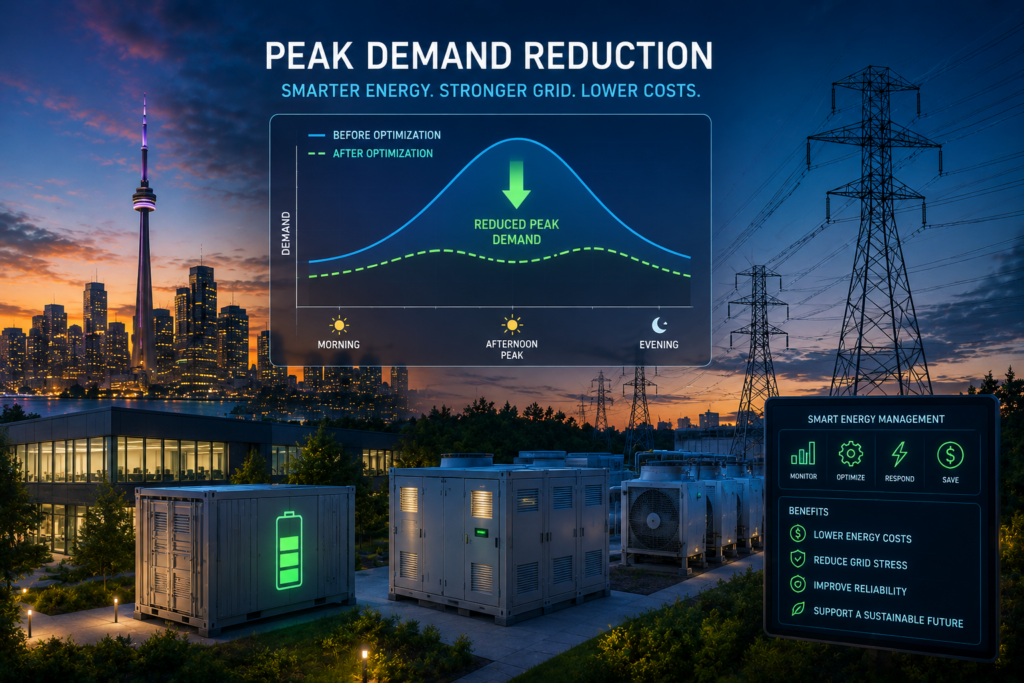
Reducing electricity demand during periods when the grid experiences its highest levels of stress can lower emissions, improve system reliability, reduce infrastructure requirements, and maximize the effectiveness of renewable generation already connected to the network. Rather than asking how more electricity can be produced, this approach asks a different question. How can electricity be used more intelligently?
The answer has implications that extend well beyond electricity costs.
Every electrical system is designed to accommodate periods of peak demand, even though those conditions may occur only a limited number of hours each year. During these peak periods, electricity demand can exceed the output available from lower-cost and lower-emission generating resources. System operators may therefore rely on additional generation that operates less frequently but remains available to preserve reliability whenever demand rises sharply.
These resources perform an important function within modern electricity systems.
At the same time, reducing the frequency and severity of peak demand can lessen the need to rely on these higher-emission resources while improving overall system efficiency. This makes demand-side flexibility one of the most practical opportunities available for supporting both environmental objectives and long-term grid resilience.
Unlike many climate initiatives that require significant infrastructure investment, demand flexibility often builds upon existing operational capabilities.
Commercial buildings, manufacturing facilities, universities, hospitals, distribution centres, food processors, mining operations, and institutional campuses frequently possess electrical processes that can be adjusted without affecting productivity or service delivery. Heating and cooling systems, refrigeration equipment, compressed air systems, water treatment processes, electric vehicle charging infrastructure, thermal storage, and selected production activities may all provide opportunities to shift electricity consumption away from periods of highest system demand.
When coordinated effectively, these operational adjustments create measurable environmental benefits.
Reducing demand during critical periods decreases pressure on transmission infrastructure, lowers the likelihood that higher-emission generation resources will be dispatched, and creates additional capacity for renewable electricity already available within the system. Instead of constructing new infrastructure to satisfy demand that occurs only occasionally, utilities and grid operators can make more efficient use of existing resources while maintaining reliable electrical service.
This broader approach is encouraging greater participation across commercial and industrial sectors.
Well-designed demand response programs enable organizations to contribute operational flexibility while continuing to support their core business objectives. Modern programs rely on forecasting, automation, operational planning, and advanced analytics to identify opportunities where electricity consumption can be temporarily adjusted with minimal operational impact. Rather than reducing productivity, these strategies improve how electricity demand aligns with available system resources.
Artificial intelligence is significantly improving these capabilities.
Modern analytical platforms evaluate weather forecasts, historical electricity consumption, occupancy patterns, industrial production schedules, renewable generation forecasts, and equipment performance simultaneously. Machine learning models continuously refine these forecasts, allowing organizations to anticipate periods of elevated system demand and prepare operational adjustments before they become necessary.
This shift from reactive to predictive energy management is changing how organizations approach sustainability.
Environmental performance is increasingly evaluated alongside operational resilience, business continuity, and financial performance. Instead of treating sustainability initiatives as independent projects, organizations are integrating energy strategy into broader operational planning, recognizing that environmental stewardship and efficient business operations often reinforce one another.
The environmental benefits extend beyond emissions reduction alone.
Reducing peak demand also decreases stress on electrical infrastructure, extending the useful life of transmission and distribution assets while improving overall system reliability. Better utilization of existing infrastructure can delay or reduce the need for additional capital investment, minimizing both environmental impacts and construction requirements associated with expanding electricity networks.
Communities benefit as well.
Reliable electricity supports healthcare, education, transportation, communications, manufacturing, and nearly every aspect of modern society. Improving system flexibility strengthens resilience during periods of extreme weather, rapid demand growth, or unexpected infrastructure disruptions, helping maintain reliable service while supporting continued economic development.
The importance of demand flexibility continues growing as electricity systems undergo rapid transformation. Electrification of transportation, industrial operations, and commercial buildings is expected to increase overall electricity consumption significantly during the coming decades. At the same time, renewable generation is supplying a larger share of electricity production, creating systems that are both cleaner and more dynamic than those of the past. Successfully managing this transition requires solutions that improve how electricity is consumed as well as how it is generated.
Demand response provides one of the few climate strategies capable of delivering environmental, economic, and operational benefits simultaneously.
When commercial and industrial facilities temporarily reduce or shift electricity consumption during periods of peak demand, the impact extends throughout the electrical system. Lower peak demand reduces stress on transmission infrastructure, improves the utilization of renewable generation, decreases reliance on higher-emission peaking resources, and supports overall system reliability. Each individual adjustment may appear modest, but coordinated participation across hundreds or thousands of organizations can create substantial system-wide benefits.
This coordinated approach reflects a broader evolution in conservation.
Historically, conservation efforts often emphasized permanent reductions in electricity consumption through more efficient lighting, insulation, motors, or equipment upgrades. These initiatives remain highly valuable and continue delivering measurable environmental benefits. However, modern electricity systems increasingly recognize that when electricity is consumed can be just as important as how much electricity is consumed.
Timing has become an environmental resource.
As renewable generation expands, there are periods when clean electricity is abundant and periods when electricity systems rely more heavily on conventional generation. Aligning flexible consumption with cleaner generation allows organizations to support emissions reductions without necessarily reducing overall productivity or economic activity. This perspective transforms energy management from a simple efficiency exercise into a sophisticated operational strategy.
Technology is making this transition increasingly practical.
Building automation systems, industrial control platforms, advanced metering infrastructure, cloud-based analytics, and artificial intelligence now provide organizations with detailed visibility into operational energy use. Facilities can evaluate equipment performance, forecast electricity requirements, monitor occupancy, assess weather impacts, and automate operational adjustments with far greater precision than was previously possible. These technologies reduce the complexity associated with participation while improving both reliability and operational outcomes.
The growth of distributed energy resources further expands these opportunities.
Commercial rooftop solar, battery storage, intelligent electric vehicle charging systems, thermal storage, and microgrids provide organizations with additional flexibility during changing grid conditions. Combined with advanced forecasting and automated controls, these technologies allow facilities to respond dynamically while maintaining business continuity and supporting broader environmental objectives.
This integrated approach is encouraging organizations to think differently about energy management.
Rather than evaluating electricity solely through the lens of procurement or utility costs, executive leadership teams increasingly consider how energy strategy contributes to environmental performance, operational resilience, regulatory preparedness, and long-term competitiveness. Sustainability is no longer viewed as a separate initiative. It is becoming part of broader organizational strategy that influences investment decisions, infrastructure planning, and operational performance.
Supporting this level of planning often requires specialized expertise.
Organizations increasingly work with an energy services company to identify operational flexibility, evaluate conservation opportunities, strengthen long-term energy strategy, and better understand how changing electricity conditions influence environmental and business objectives. This collaborative approach allows organizations to move beyond isolated efficiency projects toward integrated strategies that support both sustainability and resilience.
Perhaps the greatest environmental opportunity presented by demand response is that it maximizes the value of infrastructure already in place.
Every megawatt of demand that can be shifted away from periods of peak system stress reduces pressure on generation, transmission, and distribution infrastructure. Every operational adjustment that improves alignment between electricity consumption and available renewable generation increases the efficiency of existing clean energy investments. Rather than relying exclusively on building additional infrastructure, demand flexibility helps optimize the infrastructure society has already developed.
As countries continue pursuing ambitious climate targets, no single technology will deliver the entire solution. Renewable generation, battery storage, transmission modernization, electrification, advanced forecasting, and conservation all contribute important pieces of the transition. Demand response occupies a unique position because it strengthens each of these initiatives simultaneously. It reduces emissions, improves reliability, supports renewable integration, and encourages more efficient use of existing infrastructure.
The cleanest megawatt has often been described as the one that never needs to be generated. In an increasingly dynamic electricity system, it may also be the megawatt that can be intelligently shifted to a time when clean energy is already available. That simple change in perspective has the potential to make demand flexibility one of the most practical and scalable conservation strategies available for supporting a resilient, low-carbon future.
