
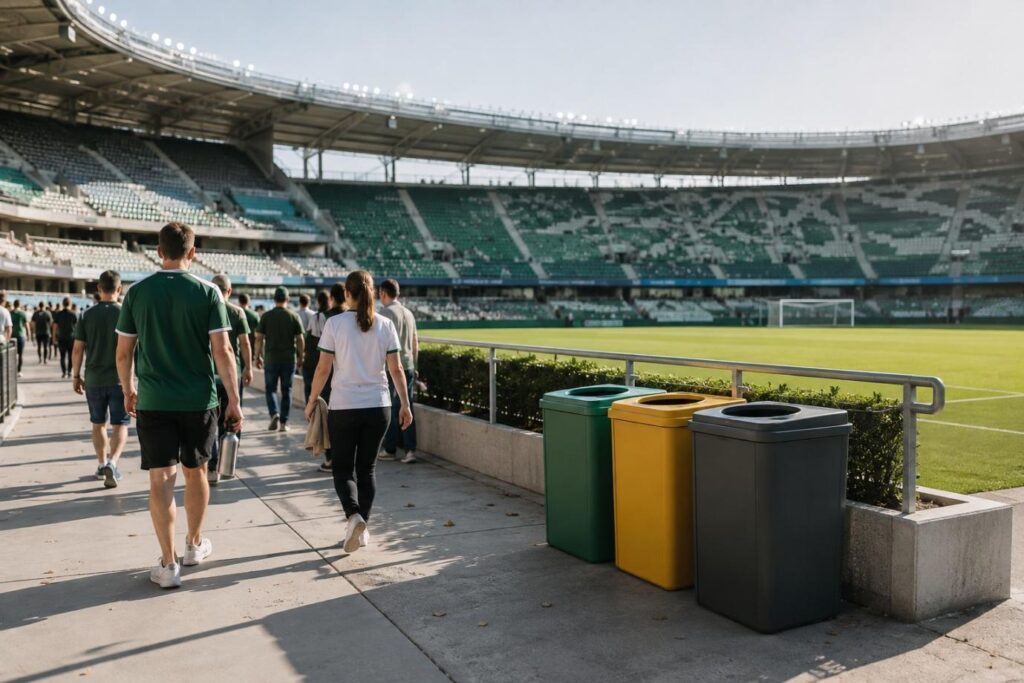
Football matches do not end when the referee blows the final whistle.
The crowd leaves, but stadium staff stay behind. Plastic cups cover the stands. Food containers fill rubbish bins. Cleaning teams spend hours preparing the venue for the next event. A new report from the United Nations Environment Programme has drawn fresh attention to this familiar scene by examining how major football tournaments handle waste, transport and stadium operations.
The discussion already reaches far beyond one competition. Football organisations across Asia continue reviewing everyday stadium routines before future tournaments, while supporters moving between football coverage, bizbet and other online interests may encounter only a small part of the work taking place behind the scenes. Waste collection, transport planning and energy use now form a much bigger part of preparations for major football events.
A new discussion starts with everyday football
The latest UNEP publication avoids dramatic promises. Instead, it asks a practical question. Can football stage major events while producing less waste and using resources more carefully?
Its answer comes through real examples rather than theory. The report highlights better waste collection, greater use of existing facilities, improved transport planning, and smarter handling of materials before and after matches. Those ideas already appear in football planning across different parts of the world, including Asia.
One number explains why organisers care. A single stadium welcoming more than 40,000 spectators can generate several tonnes of rubbish during one fixture. Plastic bottles, food containers and paper products make up a large share of that total.
Three areas receive the most attention.
- Reducing disposable plastic inside stadiums.
- Sorting waste before collection.
- Improving transport options for supporters.
None of these changes affects the football on the pitch. They change everything around it.
Matchday begins long before kick-off
Supporters usually arrive one or two hours before the opening whistle. Stadium teams begin working much earlier.
Cleaning schedules, electricity use, food deliveries and transport routes all require careful planning. One adjustment often leads to another. Fewer disposable products mean less rubbish to collect later. Better transport planning reduces congestion outside the venue after the match.
That chain of decisions has become part of football operations across many Asian venues.
Some stadium managers now place recycling stations beside food areas instead of near exits. It sounds like a small detail. In practice, people are far more likely to use a bin when it stands a few steps away.
Other venues review water use throughout the season. Grounds crews increasingly adjust irrigation to weather conditions instead of relying on fixed routines. The playing surface remains in excellent condition while unnecessary consumption falls.
Small details often produce the biggest difference
Nobody buys a ticket to watch recycling bins.
Even so, supporters notice when a stadium feels cleaner after a sold-out match. They notice shorter queues at refill stations. They notice public areas that stay tidy despite heavy attendance.
Those impressions rarely happen by accident.
Football specialists increasingly agree that practical improvements work best when supporters hardly notice them. The aim is not to change the matchday experience. The aim is to organise it more efficiently.
Across Asia, similar thinking continues to appear before upcoming football events. Some venues update lighting systems. Others reconsider waste collection or food packaging. No single model fits every stadium. Even so, the direction has become much easier to recognise than it was only a few seasons ago.
Better habits spread from one stadium to another
Football has always borrowed good ideas. Coaching methods travel quickly. Ground maintenance follows the same pattern. Stadium operations now do as well.
One successful project often encourages another venue to try something similar. Nobody expects every stadium to work in exactly the same way. Local conditions differ. Match schedules differ. Available resources differ too.
That flexibility makes steady progress possible without interrupting the football calendar.
Several practical measures now appear more often across Asian competitions.
- LED floodlights replace older lighting equipment.
- Digital tickets reduce paper use on matchdays.
- Refillable water stations appear in more public areas.
Each measure solves an everyday problem. Together they reduce waste across an entire season.
Supporters help more than they realise
Crowds influence the final result long after the referee ends the match.
A supporter who uses the correct recycling bin seems insignificant. Multiply that decision by forty thousand people and the picture changes completely. Stadium staff notice the difference during clean-up. Waste sorting becomes faster. More recyclable material avoids general disposal.
The same pattern appears with transport. Supporters may move between route planning, football updates and bizbet download as part of a much broader matchday routine, but the journey itself has practical consequences. Public transport, walking routes and shared travel can reduce pressure around busy stadiums before and after kick-off.
Simple systems usually produce the strongest response. Long instructions rarely do.
Football finds practical answers
Not every improvement requires expensive technology. Sometimes the answer sits in plain sight.
Moving recycling points closer to food outlets can increase their use. Replacing disposable catering items where practical cuts unnecessary rubbish before the first half finishes. Better planning for deliveries reduces extra vehicle movements around stadiums.
Those ideas may sound ordinary. Their combined effect becomes much easier to measure after dozens of matches.
The latest UNEP publication reflects that thinking. Instead of promoting dramatic projects, it focuses on practical solutions that stadium operators can introduce step by step. That approach suits many football venues across Asia because it allows gradual improvements without changing how supporters experience matchday.
Success is measured differently now
For decades, football judged success by results, attendance and ticket sales.
Another group of figures now attracts attention behind the scenes. Stadium managers review electricity use, waste volumes, recycling rates and water consumption after competitions finish. Those numbers help shape planning for the following season.
They also answer a simple question. Which changes worked, and which ones need another approach?
Experience grows with every tournament. Lessons learned at one venue often prove useful somewhere else across the region.
Looking beyond the final whistle
The recent UNEP report has added fresh momentum to a discussion already taking place across football in Asia. Cleaner matchdays no longer depend on one-off campaigns. They come from consistent planning before, during and after every fixture.
Nobody expects overnight change. Football rarely moves that way. Progress usually arrives through small decisions repeated again and again across hundreds of matches.
Most supporters will remember the score, the winning goal or a dramatic save. Stadium teams often remember something different. They remember less waste left behind, smoother operations and a venue ready for the next match much sooner than before. Quiet improvements like these may become one of the defining stories of Asian football over the next few seasons.
