
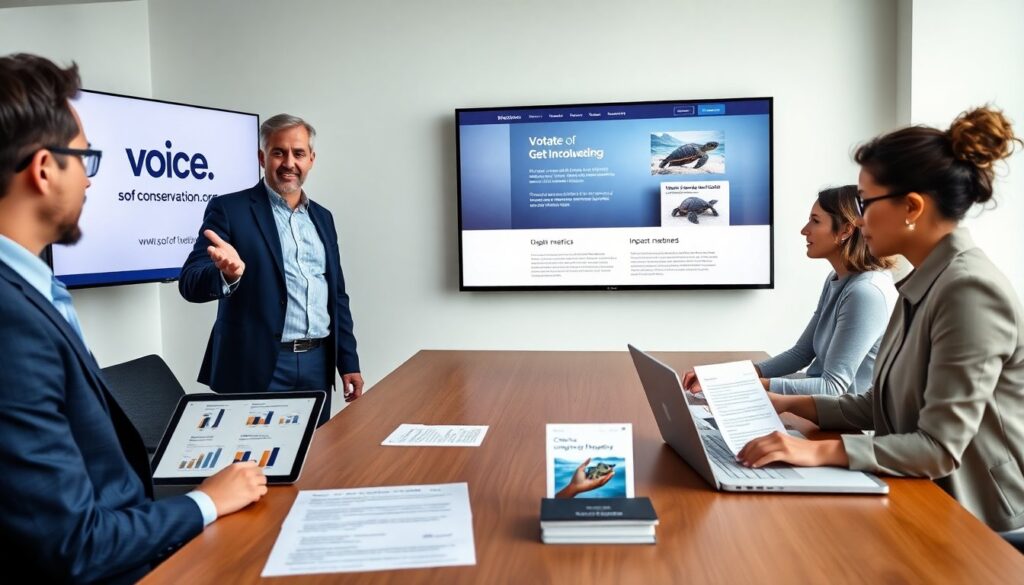
voice sofconservation.org should sound clear, direct, and trustworthy to English-speaking supporters. The team will use consistent language across pages, emails, and social posts. It will use facts, plain explanations, and respectful appeals. It will avoid jargon and vague claims. The goal is to build trust, increase donations, and grow volunteer engagement through consistent voice and simple messages.
Key Takeaways
- Voice sofconservation.org uses a clear, direct, and trustworthy tone to connect with English-speaking supporters and build trust.
- The communication focuses on educating visitors with concise facts, inviting support through clear calls to action, and demonstrating accountability with verified data.
- Five core voice attributes—plain, credible, compassionate, active, and consistent—guide all messaging for clarity and engagement.
- Content is tailored for audiences including web visitors, donors, and partners with distinct paths and relevant details like impact metrics and contact options.
- Strict writing rules and editorial checks ensure accuracy, simplicity, and effective calls to action to maximize supporter engagement.
- A structured rollout plan with templates, governance roles, and performance tracking optimizes ongoing content quality and donor response.
Define The Target Audience And Communication Goals
The primary audience is English-speaking web visitors who care about wildlife and conservation. They scan pages quickly. They want clear facts, realistic calls to act, and proof of impact. The secondary audience includes donors, partners, and journalists who seek credible sources and short summaries.
voice sofconservation.org will aim three goals. First, it will educate visitors with concise explanations of programs and results. Second, it will invite support through clear calls to donate, volunteer, or share. Third, it will build credibility with documented outcomes, transparent budgets, and verifiable citations.
For web visitors, the site will use short paragraphs and explicit links to evidence. For donors, the site will use impact metrics and year-by-year summaries. For partners, the site will provide contact paths and case studies. Each audience will find distinct content paths that match their tasks.
Establish Core Voice Attributes And Messaging Pillars
Voice sofconservation.org will use five core attributes. It will be plain, credible, compassionate, active, and consistent.
Plain: Sentences will use simple nouns and verbs. The site will state actions, timelines, and outcomes. It will avoid excess modifiers and technical terms without definition.
Credible: The site will cite sources and show data. Each claim will link to reports, photos, or partner confirmations. It will present both successes and limits.
Compassionate: The site will show care for animals, habitats, and communities. It will use human stories that highlight local people and specific species.
Active: The site will use active verbs and clear calls. Buttons will say Donate, Join, Report, or Read Report. The site will show next steps after each article.
Consistent: The site will keep tone and word choices steady across channels. It will reuse phrases that perform well. It will preserve the same hierarchy for headings and calls to action.
Messaging pillars will frame content for visitors. Pillar one: Why it matters. This pillar will state ecological or cultural risk in plain terms. Pillar two: What they do. This pillar will list programs, goals, key metrics, and timelines. Pillar three: How to help. This pillar will give direct actions and expected results. Pillar four: Accountability. This pillar will show budgets, audits, and project updates.
Practical Writing Guidelines, Style Rules, And Tone Examples
voice sofconservation.org will follow simple writing rules. Rule one: Use subject-verb-object sentences. Rule two: Keep paragraphs under four sentences. Rule three: Use one idea per paragraph. Rule four: Use concrete numbers and dates. Rule five: Link to sources.
Style rules will set specifics. Use American English. Use Oxford comma. Use active voice. Use present tense for ongoing programs and past tense for completed work. Use short headings that start with verbs when possible. Use plain labels for navigation: About, Programs, Impact, Get Involved, Donate.
Tone examples will guide writers. Example 1 (headline): Protect coastal sea turtles now. Example 2 (intro line): The team rescues nests and restores beaches. Example 3 (donation CTA): Give monthly to protect nests this season. Example 4 (impact line): Last year, the project protected 3,200 hatchlings.
Writers will avoid vague modifiers. They will avoid buzzwords and unclear claims. They will not use banned expressions.
Accessibility rules will require alt text for images and short summaries for video. Each post will include a one-line summary under the headline and a three-sentence summary at the top for scannability.
Editorial checks will include fact review, link verification, and tone review. Each article will get a quick checklist: accuracy, clarity, call to action, and citation. Editors will reject pieces that lack a clear ask or show unsupported claims.
Content Templates, Governance, And Rollout Plan
The team will use three templates. Template A: Page template for programs. Template B: Short article template for news and updates. Template C: Donation landing page template.
Each template will list required fields. Templates will require a one-line summary, three key metrics, one photo with alt text, and at least one source link. The donation page will require clear impact tiers and a monthly option.
Governance will assign roles. One editor will approve tone. One data lead will verify numbers. One web lead will publish pages. The team will meet weekly for content planning and monthly for metrics review.
The rollout plan will start with high-priority pages. Step one: Update the homepage and Donate page. Step two: Update program pages. Step three: Publish a set of five news updates using the new voice. Step four: Train staff on the templates and checklist.
The plan will include tracking. The team will track page visits, donation conversions, and time on page. It will run A/B tests on headlines and CTAs. The team will revise templates based on results and user feedback.
