
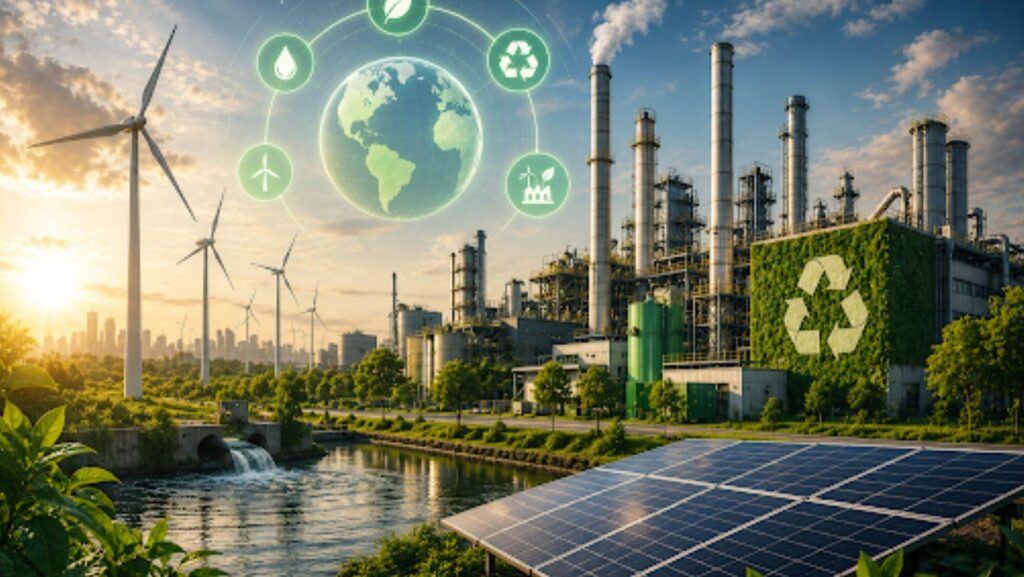
As countries around the world work toward ambitious climate targets, conversations about sustainability often focus on expanding renewable energy generation, accelerating the adoption of electric vehicles, or developing new battery storage technologies. While each of these initiatives plays an important role in reducing greenhouse gas emissions, one of the most immediate opportunities to improve environmental performance is frequently overlooked. Before building additional generation capacity, industries have an opportunity to make significantly better use of the electricity they already consume.
Industrial facilities account for a substantial share of electricity consumption worldwide. Manufacturing plants, mining operations, food processors, chemical facilities, commercial buildings, hospitals, universities, and distribution centres collectively place enormous demands on electrical infrastructure every day. As economies continue to grow and electrification accelerates across transportation and industry, demand for reliable electricity is expected to rise steadily for decades to come.
Meeting that demand presents a considerable challenge.
Constructing new power generation facilities, expanding transmission infrastructure, and modernizing electrical grids require years of planning, regulatory approvals, environmental assessments, and billions of dollars in investment. While those projects remain essential for supporting long-term economic growth, many energy experts agree that improving the efficiency of existing electricity consumption represents one of the fastest and most cost-effective paths toward a more sustainable energy future.
This philosophy is gradually reshaping how industrial organizations approach sustainability.
Historically, environmental initiatives often focused on reducing electricity consumption through isolated equipment upgrades. Companies replaced inefficient lighting systems, upgraded motors, modernized heating and cooling equipment, improved insulation, and invested in higher-efficiency manufacturing technologies. These improvements continue to generate meaningful environmental benefits and remain an important part of every organization's sustainability strategy.
Today, however, industrial sustainability extends far beyond reducing kilowatt hours.
Business leaders increasingly recognize that understanding when electricity is consumed, how facilities respond to changing grid conditions, and how operational flexibility can support electricity systems are equally important components of responsible energy management. Rather than viewing energy solely as an unavoidable operating expense, organizations are beginning to see it as a strategic resource that influences environmental performance, operational resilience, and long-term competitiveness.
This evolution has become particularly important as renewable electricity generation continues expanding around the world.
Wind, solar, and other renewable resources are helping reduce dependence on fossil fuels while lowering carbon emissions associated with electricity generation. Their growing contribution is an important environmental achievement. At the same time, renewable generation naturally fluctuates according to weather conditions, seasonal changes, and daylight availability. Maintaining reliable electricity service therefore requires greater coordination between electricity supply and electricity demand than ever before.
Industrial organizations are uniquely positioned to support that balance.
Many manufacturing processes contain operational flexibility that allows certain activities to be adjusted without reducing production output or affecting customer commitments. Heating and cooling systems can often be optimized. Compressed air systems may operate more efficiently when carefully managed. Refrigeration processes, pumping systems, water treatment facilities, and industrial ventilation equipment frequently offer opportunities for optimization that improve both environmental and financial performance.
Rather than asking businesses to consume less electricity at all times, modern conservation programs increasingly encourage organizations to consume electricity more intelligently.
Across Canada, many industrial organizations have adopted energy demand management strategies that help facilities better align electricity consumption with changing system conditions. These initiatives encourage businesses to reduce unnecessary demand during periods when electricity systems experience the greatest stress while maintaining normal operations whenever possible.
The environmental benefits extend well beyond individual facilities.
Reducing peak electricity demand decreases pressure on existing generating stations and transmission infrastructure. It improves overall grid efficiency, reduces the need for additional peak generation resources, and allows utilities to integrate larger amounts of renewable electricity without compromising system reliability. From a conservation perspective, improving how existing infrastructure is utilized often produces environmental benefits much faster than constructing entirely new generating assets.
This concept is becoming increasingly important as artificial intelligence, cloud computing, and advanced manufacturing place new demands on electricity systems.
Large data centres supporting AI applications consume enormous amounts of electricity around the clock. Electric vehicle manufacturing continues expanding across North America. Critical mineral processing, battery production, and advanced industrial automation all contribute to steadily increasing electricity demand. Without improvements in operational efficiency, utilities would need to invest in substantially larger infrastructure expansions simply to accommodate periods of peak consumption.
Fortunately, advances in digital technology are providing organizations with far greater visibility into how electricity is used throughout their operations.
Modern industrial facilities collect continuous information from production equipment, electrical systems, environmental controls, occupancy sensors, and building automation platforms. Instead of relying on monthly utility invoices, managers can evaluate energy performance in real time, identify inefficiencies almost immediately, and make informed operational decisions based on continuously updated information.
Artificial intelligence is accelerating this transformation even further.
Machine learning platforms can evaluate enormous volumes of operational data, identifying relationships between equipment performance, weather conditions, occupancy levels, production schedules, and electricity consumption that would be impossible to recognize through manual analysis alone. These systems help organizations anticipate inefficiencies before they develop, creating opportunities for continuous improvement rather than reactive correction.
The result is a more resilient and environmentally responsible approach to industrial operations, one that recognizes conservation is not simply about consuming less energy but about using available energy more effectively.
The growing availability of operational intelligence has fundamentally changed how sustainability initiatives are measured. Instead of relying solely on annual utility reports or periodic environmental audits, organizations can now monitor energy performance continuously and evaluate the effectiveness of conservation initiatives almost immediately. This creates a culture of continuous improvement where environmental performance becomes part of everyday operational decision-making rather than an annual reporting exercise.
The financial advantages of this approach are significant.
For many industrial organizations, electricity represents one of the largest controllable operating expenses. Manufacturing facilities, mining operations, commercial real estate portfolios, food processing plants, and institutional campuses often spend millions of dollars annually on electricity. Even relatively modest improvements in efficiency can generate substantial savings over time, allowing businesses to reinvest capital into modernization, innovation, workforce development, and additional sustainability initiatives.
This alignment between environmental stewardship and financial performance has become one of the strongest drivers behind industrial conservation programs. Sustainability is no longer viewed solely as a corporate responsibility initiative. Increasingly, it is recognized as a practical business strategy that strengthens competitiveness while supporting environmental objectives.
Investors have also taken notice.
Environmental, Social, and Governance reporting has become an important consideration for both public and private organizations. Financial institutions increasingly evaluate environmental performance when assessing long-term business resilience, while customers are placing greater emphasis on working with organizations that demonstrate measurable commitments to responsible resource management. Businesses capable of documenting meaningful improvements in energy efficiency often strengthen their competitive position while responding to growing stakeholder expectations.
At the same time, governments around the world continue introducing policies that encourage cleaner industrial operations. Incentive programs supporting energy efficiency, electrification, emissions reduction, and advanced technology adoption are becoming increasingly common as countries work toward ambitious climate commitments. Organizations that have already developed mature energy strategies are often better positioned to participate in these programs because they possess the operational data necessary to identify opportunities and measure outcomes.
Canada has earned an international reputation for leadership in electricity conservation and industrial innovation.
Several provinces have developed sophisticated electricity markets that encourage businesses to participate in conservation initiatives while improving the overall efficiency of the electrical system. Rather than relying exclusively on new generation capacity to satisfy increasing demand, Canadian energy policy has increasingly recognized that conservation and operational flexibility represent valuable resources in their own right.
This philosophy supports a broader transition toward a more resilient electricity system.
As renewable generation continues expanding, electricity grids require greater flexibility from both supply and demand. Wind and solar generation naturally fluctuate throughout the day, making it increasingly important for electricity consumption to become more responsive as well. Industrial organizations that can safely adjust certain operations during periods of high system demand contribute to a more stable electricity network while helping maximize the value of renewable generation assets.
The integration of digital technologies is making this possible on an unprecedented scale.
Modern automation platforms, advanced building management systems, connected industrial equipment, and artificial intelligence are enabling organizations to make operational adjustments that would have been extremely difficult only a decade ago. Instead of relying on manual intervention, facilities can increasingly respond automatically to changing operating conditions while maintaining productivity, quality, and workplace safety.
These technologies are also changing the role of facility managers and sustainability professionals.
Rather than spending time collecting information from multiple systems, teams can focus on interpreting operational trends, identifying opportunities for improvement, and developing long-term strategies that align environmental objectives with business priorities. Access to better information allows organizations to move beyond reactive maintenance and short-term cost reduction toward continuous operational optimization.
Successfully implementing these strategies, however, requires expertise that spans engineering, operational analytics, electricity markets, automation, and sustainability planning. Industrial energy systems have become increasingly sophisticated, requiring organizations to consider technical, financial, environmental, and regulatory factors simultaneously.
For this reason, many organizations choose to work with an experienced energy services company that can provide specialized knowledge across these disciplines. Rather than approaching sustainability as a series of disconnected projects, these partnerships help businesses develop integrated strategies that improve operational performance, reduce environmental impact, strengthen resilience, and support long-term corporate objectives.
Perhaps the most important lesson emerging from today's energy transition is that conservation is no longer defined simply by reducing consumption. Modern conservation focuses on maximizing the value of every unit of electricity that enters a facility. It is about ensuring equipment operates efficiently, identifying waste before it becomes costly, improving operational flexibility, and using data to make smarter decisions every day.
Looking ahead, electricity demand will almost certainly continue to grow. Artificial intelligence, electrified transportation, advanced manufacturing, battery production, and population growth will all require additional generating capacity and continued investment in electrical infrastructure. Yet building more infrastructure alone will not be enough to create a sustainable future.
The organizations that lead the next generation of industrial sustainability will be those that recognize energy as a strategic asset rather than simply another operating expense. They will combine technology with operational expertise, leverage data to improve decision-making, and embed conservation into everyday business practices rather than treating it as a separate environmental initiative.
Ultimately, the future of conservation will not depend solely on producing cleaner electricity. It will also depend on how intelligently industries, institutions, and communities use the energy already available to them. That shift in thinking has the potential to reduce emissions, improve economic competitiveness, strengthen electricity systems, and create a more sustainable future for businesses and society alike.
